
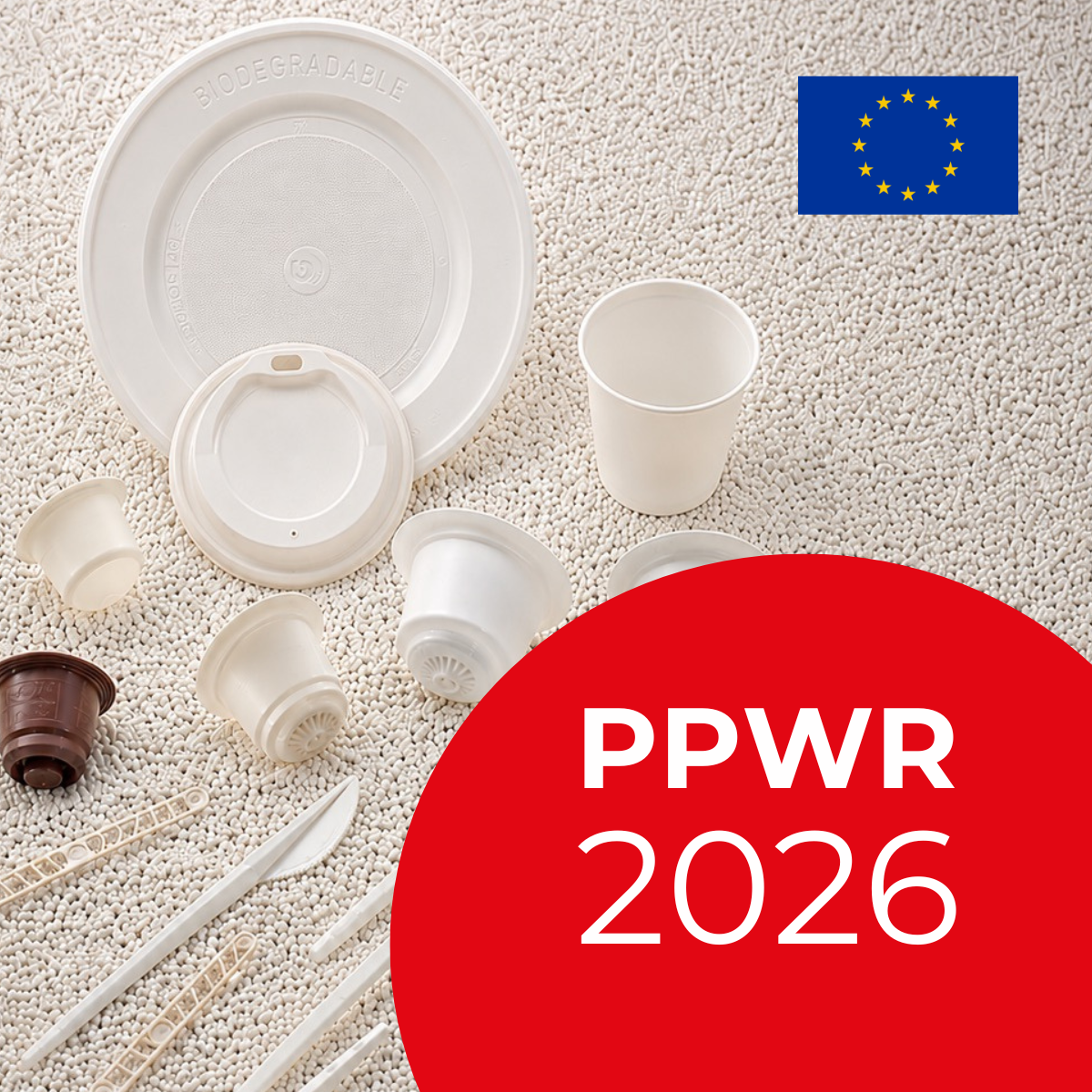
12 August 2026 marks an important milestone for the packaging industry. From this date, the main provisions of the new Packaging and Packaging Waste Regulation (PPWR) begin to apply across the European Union, influencing the way packaging is designed, manufactured and placed on the market.
The Regulation aims to promote a more circular economy by reducing packaging waste, improving resource efficiency and encouraging the development of packaging solutions designed for recycling or, where appropriate, composting.
For companies operating throughout the packaging supply chain, the PPWR is more than a regulatory update. It represents a significant shift in the way materials, product design and manufacturing processes are approached.
A New Approach to Packaging Design
The PPWR introduces a new perspective on packaging. It is no longer assessed solely for its ability to protect and preserve products, but also for its environmental impact and end-of-life management.
Among the main changes introduced by the Regulation are:
- new compliance requirements for packaging placed on the European market;
- increased attention to material composition, particularly for food contact applications;
- measures aimed at reducing waste and improving resource efficiency;
- a gradual harmonisation of packaging requirements across the European Union.
The Regulation will be implemented progressively, with additional milestones extending through 2030 and beyond.
Material Selection Becomes Even More Strategic
In this evolving regulatory landscape, material selection plays an increasingly important role.
For packaging converters, choosing a compound is no longer based solely on processing performance. Materials must also support compliance with evolving regulations while meeting the technical requirements of each application.
Mechanical performance, processability, consistent quality and reliable technical support are becoming essential factors when selecting a material supplier.
The Role of Compostable Materials
The PPWR also recognises the role of compostable materials for specific applications, acknowledging their contribution within an increasingly circular waste management system.
As a result, the availability of compounds specifically developed for industrial processing represents an important opportunity for manufacturers looking to expand their product portfolio with solutions aligned with future market requirements.
For more than 20 years, Fi-Plast has been investing in the development of Estabio®, its family of compostable compounds designed for a wide range of packaging and food service applications. Through continuous research and development, combined with dedicated technical support, the company helps converters identify the most suitable material for their production needs.
Preparing Today for Tomorrow’s Challenges
The entry into application of the PPWR is only the beginning of a broader transformation.
As new requirements are progressively introduced over the coming years, companies will increasingly benefit from working with partners capable of following regulatory developments and developing materials that meet both current and future market demands.
For this reason, Fi-Plast continues to invest in research, innovation and technical expertise, supporting its customers with advanced compound solutions designed to meet the evolving needs of the packaging industry.
